Supported by a Developing Your Creative Practice Grant by Arts Council England, I will spend the next few months working closely with artists, curators, and academics to gauge any interest in developing a framework of aesthetic theory, similar to ‘Latinx’ in the US or the ‘Black British Art Movement’ in the UK, which considers the specificities of Latin American migration in the UK, to help position this genre in the British and Latin American art ecosystems.
Real Sociedad Fotográfica, Madrid, 12 February to 7 March 2026
.
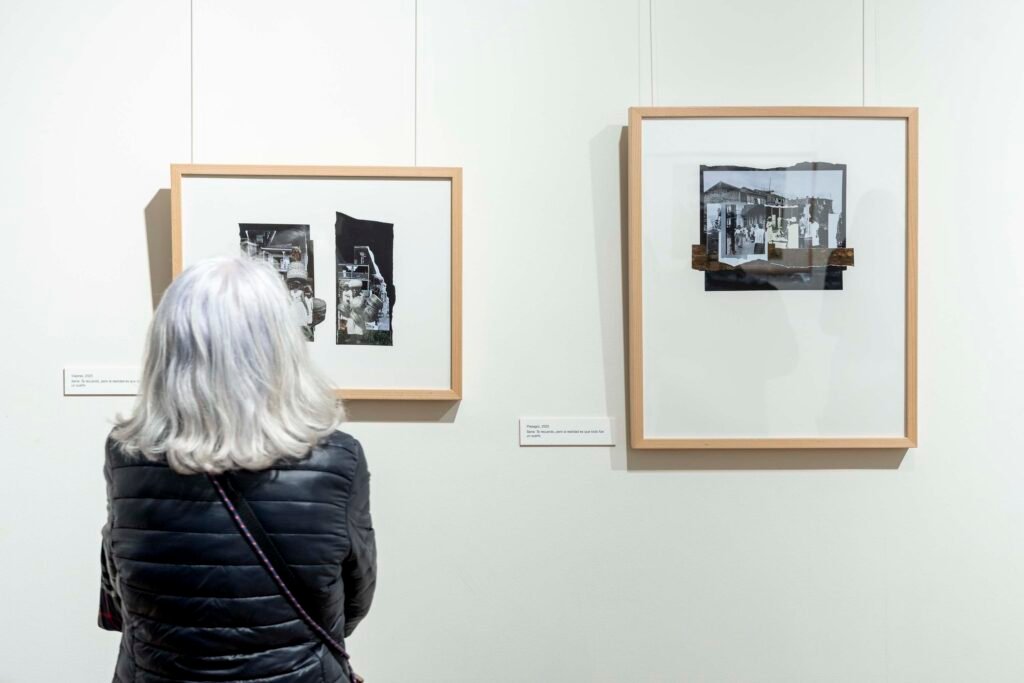
What do we remember about places that were once ours? How do we make sense of the fragmented stories that persist in our memory? Postcards of Memory. Visual Notes of Places Not Forgotten constructs the memories that Giana De Dier holds of El Terraplén, a historic area of great vibrancy in the Old Quarter of Panama City. It was a space where everyday life revolved around the bustle of the market, amid the cries of vendors and the constant flow of buyers and accompanied by the rhythms of the fishing dock and the unceasing noise of cars.
.
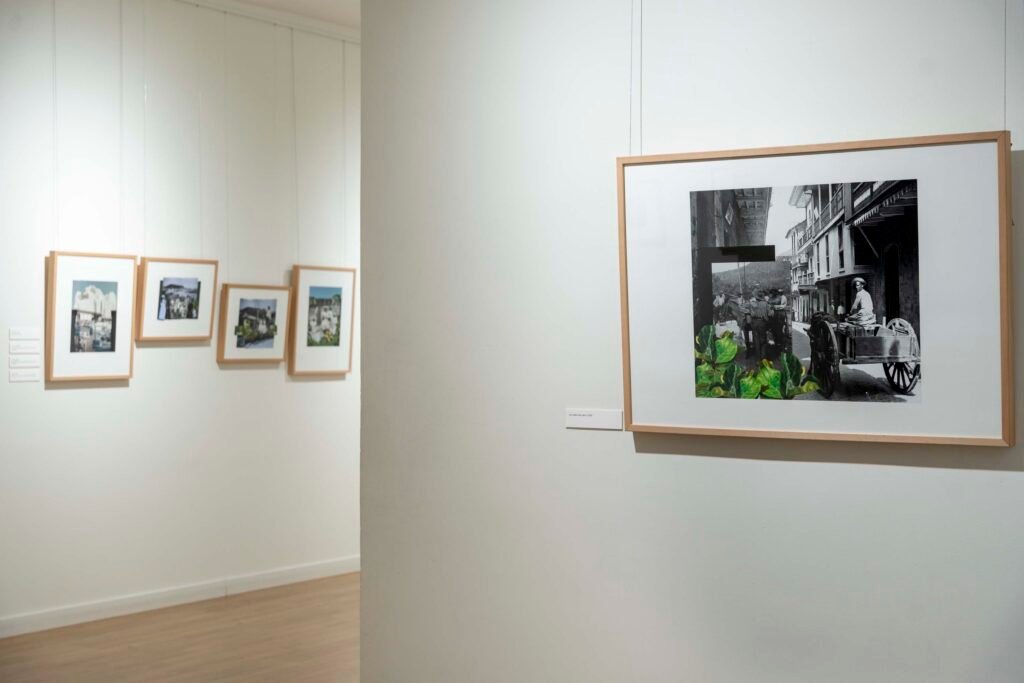
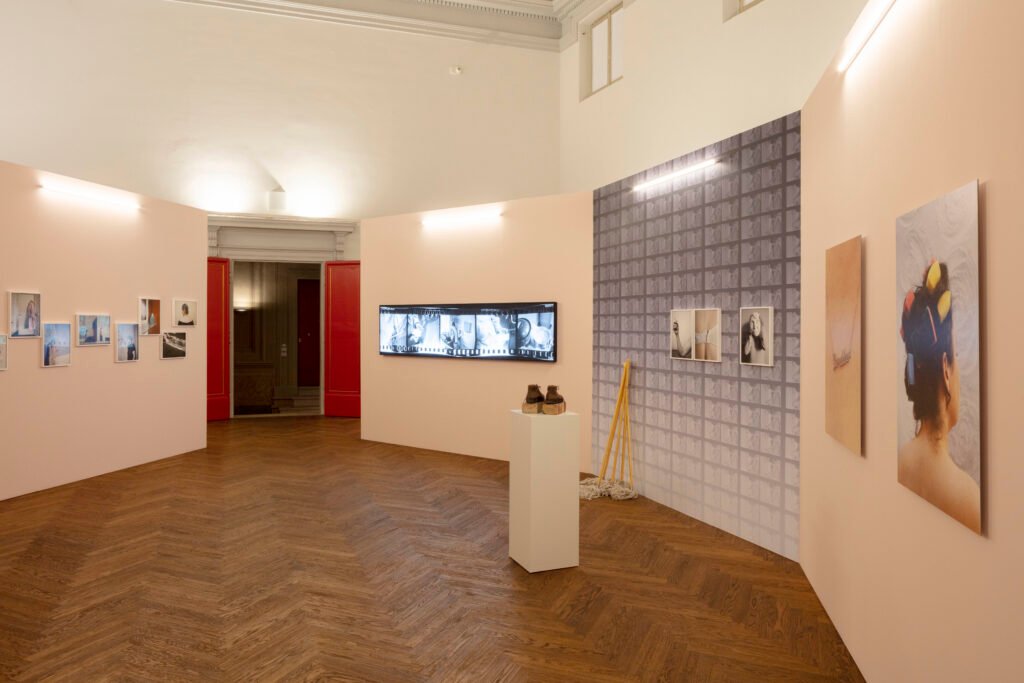
Installation view: Postcards of Memory. Visual Notes of Places Not Forgotten. Real Sociedad Fotográfica, Madrid, 2026. Photography: Jingjing Luo
.
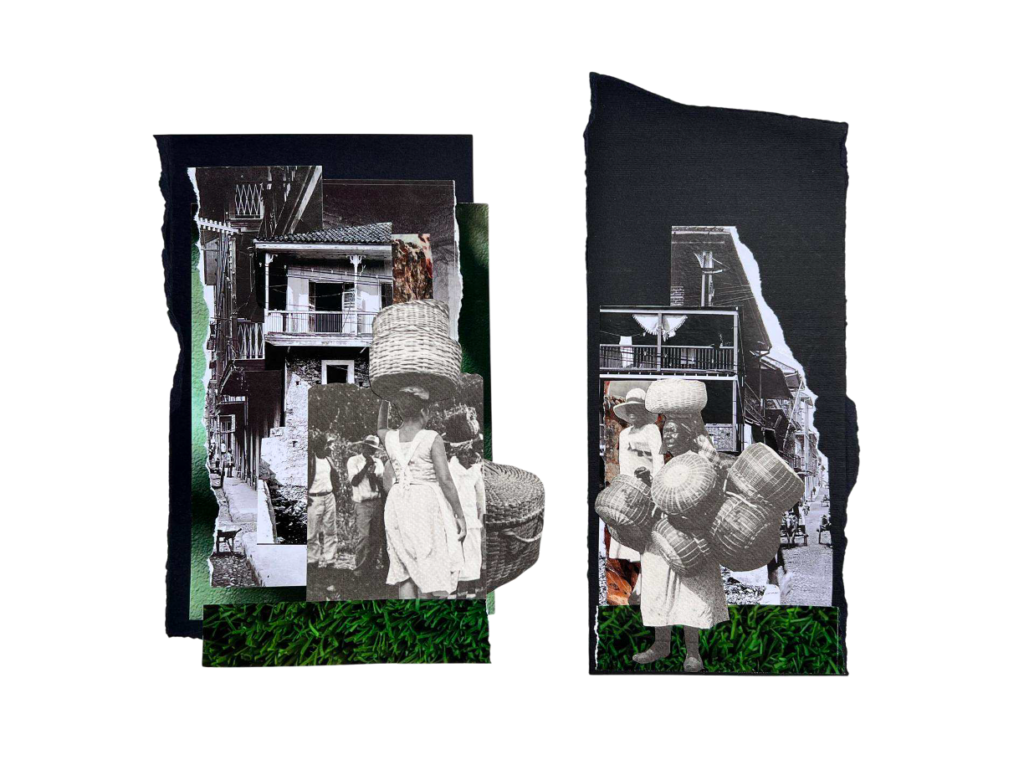
The exhibition brings together three series. I Remember You, But the Truth Is It Was All a Dream is a visual poem built from De Dier’s memories of El Terraplén during the 1980s and 1990s. Through the appropriation of press and archival images, the compositions evoke, in an affective way, a lived space; a memory represented by others, from the emotional distance offered by the objective gaze of an unexperienced reality.
.
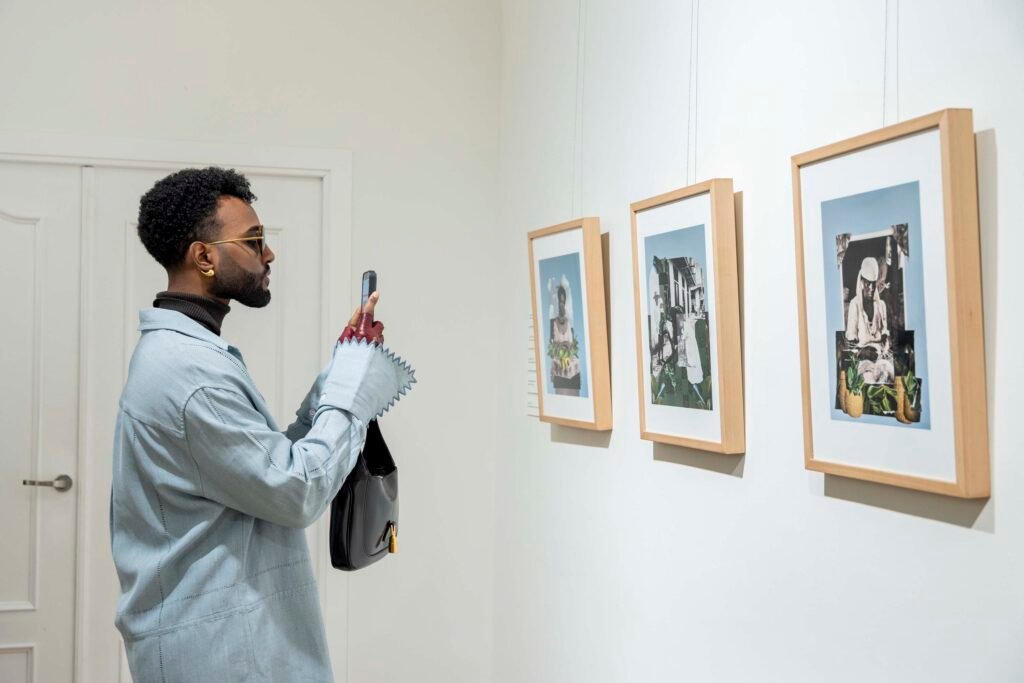
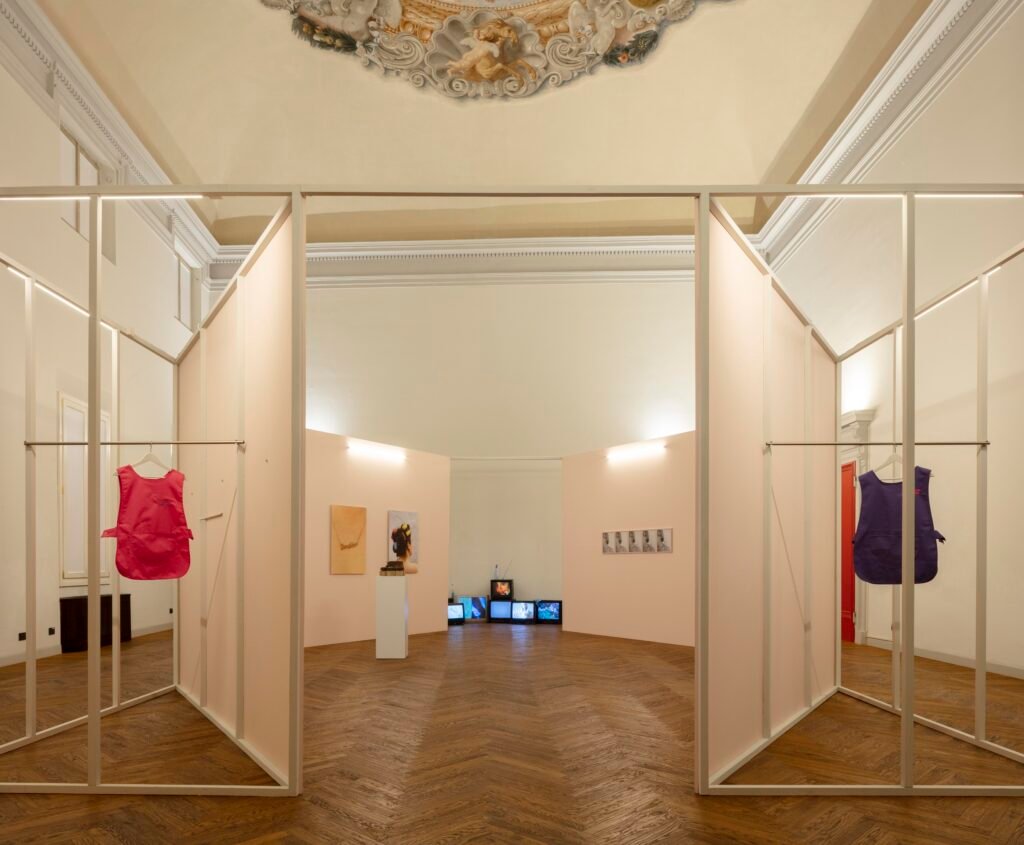
Installation views: Postcards of Memory. Visual Notes of Places Not Forgotten. Real Sociedad Fotográfica, Madrid, 2026. Photography: Jingjing Luo
.
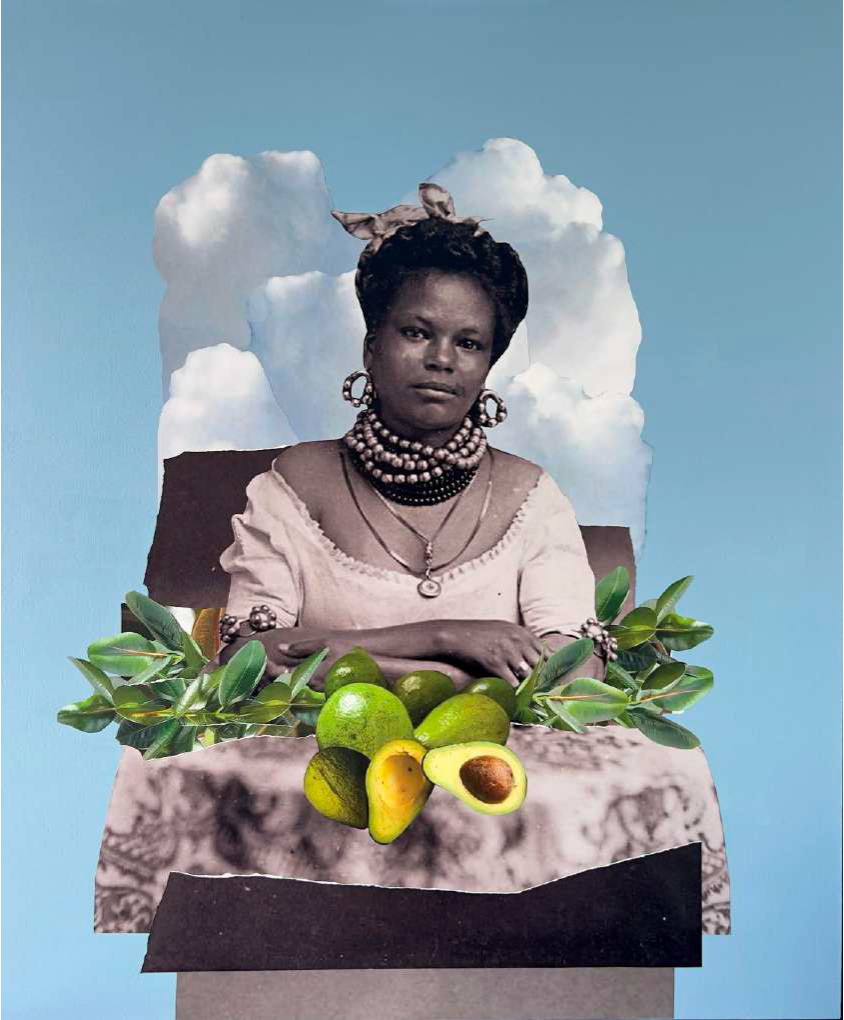
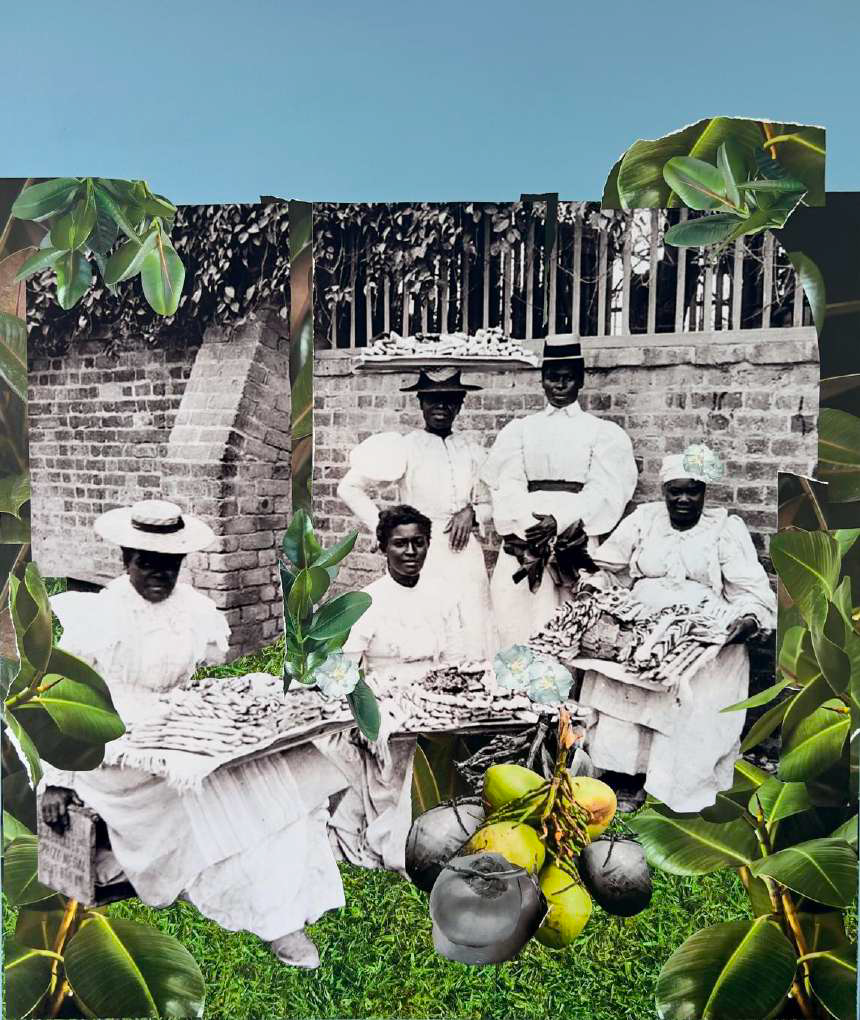
In We Will Meet Again Because Everything Repeats Itself, De Dier explores the circularity of time. In the absence of historical sources documenting Afro-Caribbean presence in Panama, the artist interrogates diaspora archives and imagines the people depicted inhabiting the Terraplén of her memory, thus establishing an affective and temporal relationship between these figures and her recollections.
.
Agua from the series Nos volveremos a ver porque todo se repite, 2025. Courtesy Giana De Dier
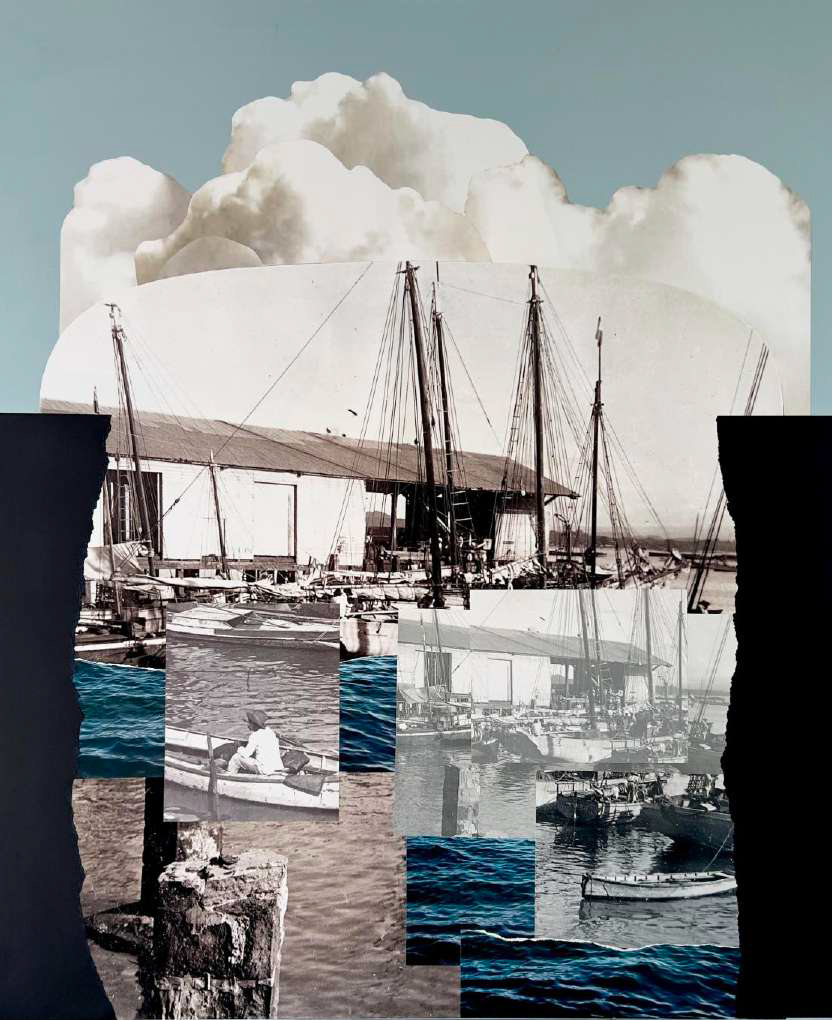
El muelle from the series No me olvides, 2025. Courtesy Giana De Dier
Do Not Forget Me is the silent cry of places that remain unforgotten. This series recreates the vitality and dynamism of El Terraplén’s most emblematic spaces—the dock, the market, and the surrounding streets.
Through the use of historical photographs and collage as a visual strategy, Postcards of Memory. Visual Notes of Places Not Forgotten anticipates the condition of memory and reconstructs scenes of everyday life that strive to persist, despite modernisation and the re-signification of the territory, which has undergone numerous urban renewals in recent years. De Dier composes fragmented images that function as incomplete records of a daily passage of time, shaped by the emotional bonds formed with the place and the community that inhabits it.
.
Viajeras from the series Te recuerdo, pero la realidad es que todo fue un sueño, 2025. Courtesy Giana De Dier
Lxs Sexiliadxs. Formulating a Counter-Family Album, presented as part of the International Symposium On the Edge of Visibility organised by Archives of Women Artists, Research and Exhibitions – AWARE – and Women Photographers International Archive – WOPHA – at the Pérez Art Museum, Miami, (2023).
Repurposing the Archive. Recounting Latin American Women’s Stories of Migration, presented at the Association for Art History Annual Conference, University College London, (2023).
Configuring the ‘I’s. Latin American Visual Artists in the UK, presented to MA students of Fine Arts at the University of Murcia, (2021).
ARCHIVO VIVO is a growing platform that strengthens the community of visual artists of Latin American and Spanish-speaking Caribbean descent living in the UK, through opportunities for encounter, connection and increased visibility.
It emerges from research into the presence of contemporary Latin American artists within the British arts ecosystem. Among the findings are a lack of visibility and limited opportunities for the production and exhibition of work, as well as a shared need among artists, curators and those interested in art from Latin America to strengthen connections, foster exchange and establish networks of support.
ARCHIVO VIVO contributes to diversifying and making a more representative arts system, positioning itself as a point of reference for artists, researchers, curators and writers interested in art from Latin America and the Spanish-speaking Caribbean.
ARCHIVO VIVO’s mission is to strengthen the community of visual artists of Latin American and Spanish Caribbean descent living in the UK, by improving their visibility, access and connectivity within the British arts ecosystem. Through a growing digital platform, the project facilitates encounters between artists and other cultural agents—including curators, researchers and organisations—promoting exchange, professional development and the circulation of knowledge.
Vision
ARCHIVO VIVO aims to become a nationally recognised reference resource for the identification, research and dissemination of the work of visual artists from Latin America and the Spanish Caribbean living in the UK. The project contributes to a more diverse, representative and connected cultural sector by supporting the development of sustainable networks and expanding access to contemporary artistic practices that have historically been underrepresented. ARCHIVO VIVO is conceived as a dynamic and evolving archive, in ongoing dialogue with the communities it serves and with the broader UK cultural context.
Values
Community
We believe in the power of collective practice and in the importance of creating spaces for support, dialogue and collaboration among artists.
Diversity and representation
We celebrate the multiplicity of identities, trajectories, languages and experiences that shape Latin American and Caribbean art in the UK.
Accessibility
We are committed to open tools and digital formats that facilitate access to artists’ work and promote its dissemination to wide and diverse audiences.
Collaboration
We understand art as a relational process and encourage partnerships between artists, institutions, curators and communities.
Living memory
Archivo Vivo is not a static repository, but a space in constant development that recognises the value of the present and the ongoing evolution of artistic practices.
Supported by a Developing Your Creative Practice Grant by Arts Council England, I will spend the next few months working closely with artists, curators, and academics to gauge any interest in developing a framework of aesthetic theory, similar to ‘Latinx’ in the US or the ‘Black British Art Movement’ in the UK, which considers the specificities of Latin American migration in the UK, to help position this genre in the British and Latin American art ecosystems.
Alchemy is a European word derived from Arabic that refers to philosophies of quasi-magical change and transmutation aimed at positive, surprising encounters or endings[1]. Accordingly, alchemists are those who preserve and perform the knowledge sustained by alchemy.
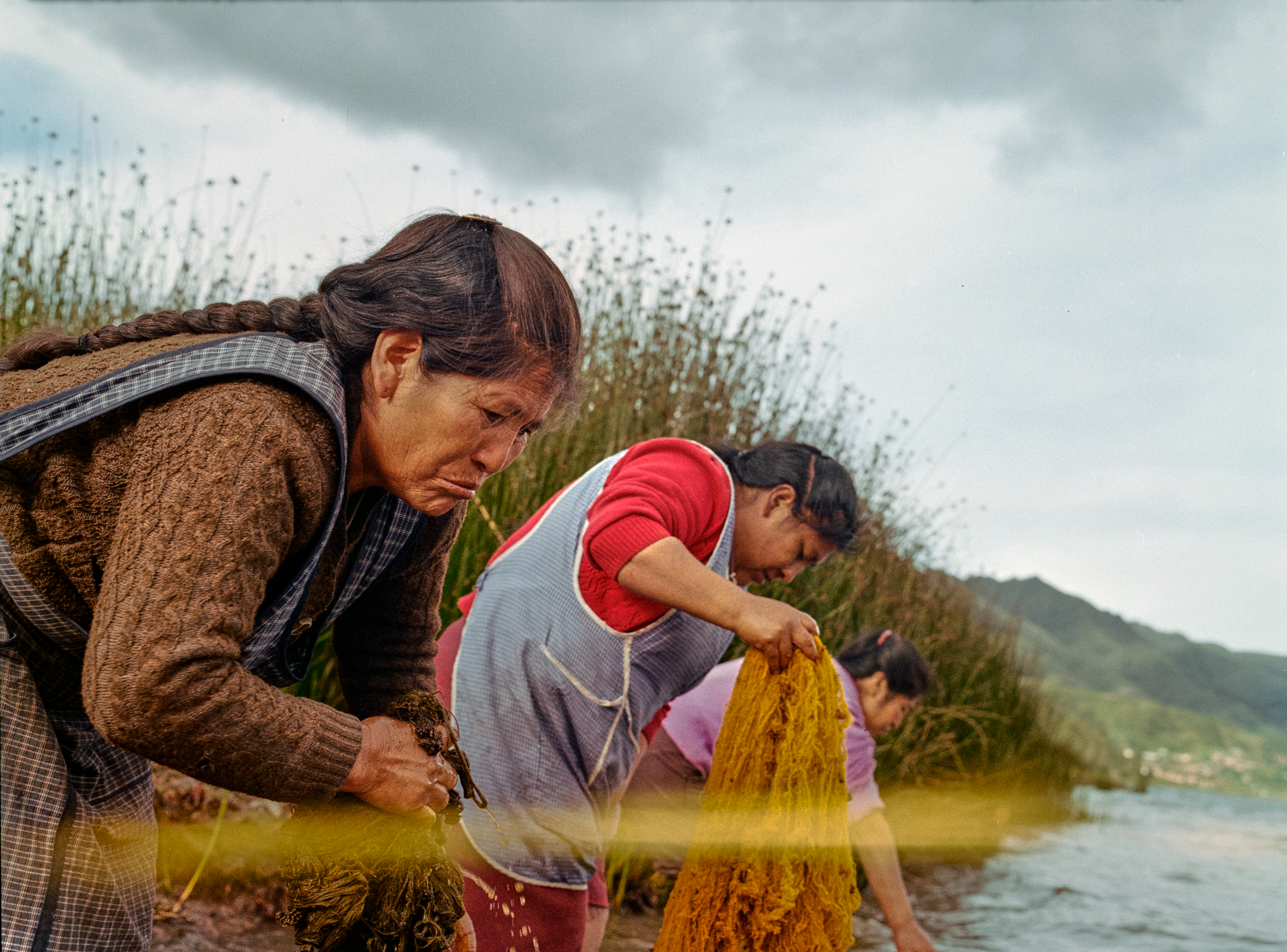
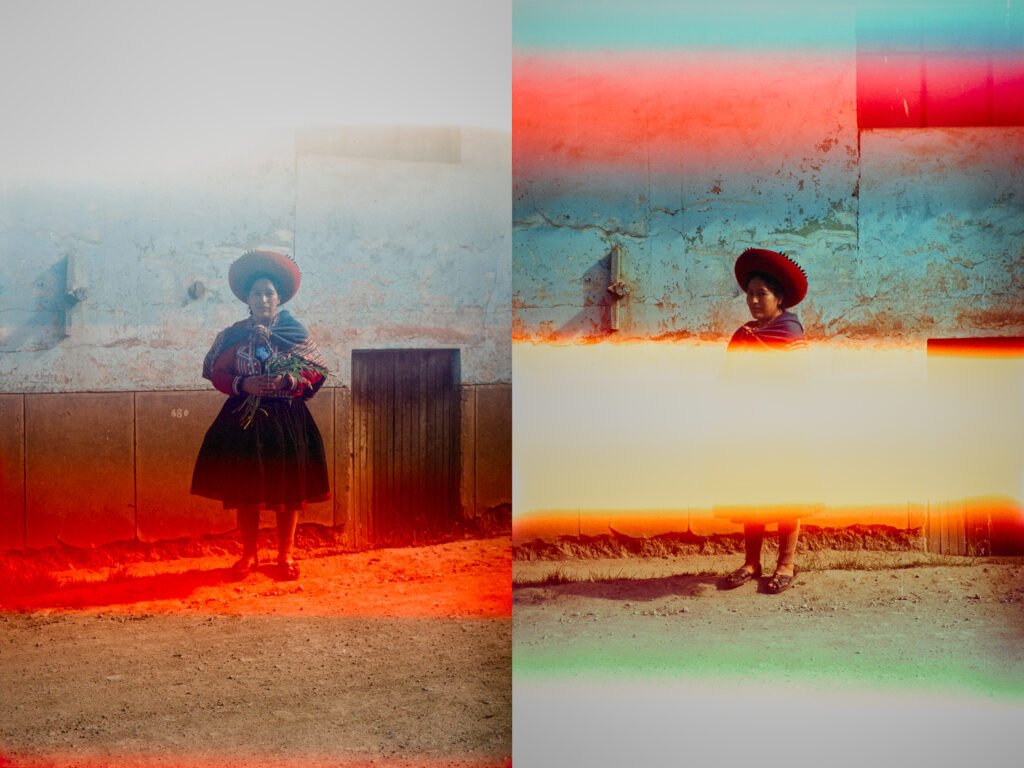
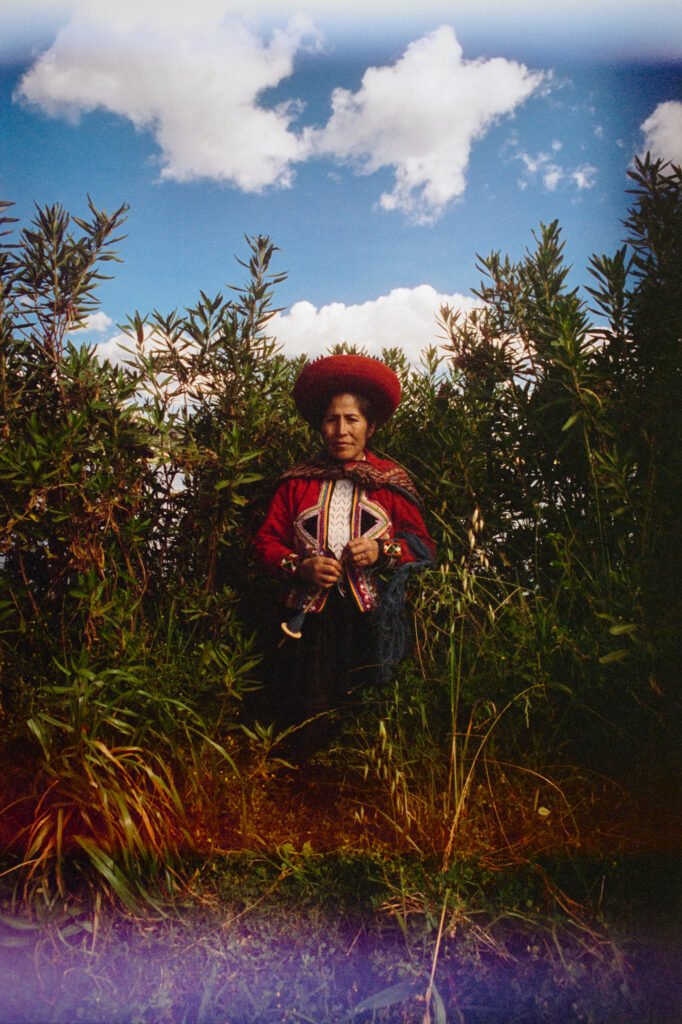
Alquimia Textil by the Peruvian Nicolás Garrido, documents the magic of Andean traditional dye extraction and textile dyeing as safeguarded by the artisan women’s cooperative Pumaqwasim[2]in Chinchero, Cusco. With this project, the photographer creates a visual dialogue with ancestral traditions, memory, natural environment, and materiality.
Having taken a leap into photography only three years ago from a career in digital marketing, for Garrido, Alquimia Textil was born out of the personal need to engage with a long-term project after having done numerous short stories.’ To access the Pumaqwasim cooperative and document the ancient technique, he collaborated with the Peruvian fashion designer of sustainable clothing, María Lucía Muñoz, who was already researching the work of the Indigenous women. She later became essential in both the conceptual and material features of the project.
The photographer used two film cameras that he had borrowed from friends – a Nikon M-35 and a Mamiya RB67. Unbeknownst to him, the cameras were faulty, and it was only upon collecting the photographs from the laboratory that Garrido realised the negatives were flawed due to issues with the camera components. Besides the naturally occurring grain of film photographs, all the images presented unexpected light leaks, either subtle or extremely obvious, which echoed the fundamentally unpredictable nature of the traditional dyeing techniques documented in the images. The fashion designer encouraged Garrido to embrace error as part of the conceptual rationale of the project: ‘We realised that these faults added layers of meaning to the work, rather than detracting. Even every digital photograph I took felt as if they were too polished for the aesthetics the project called for’ he shares.
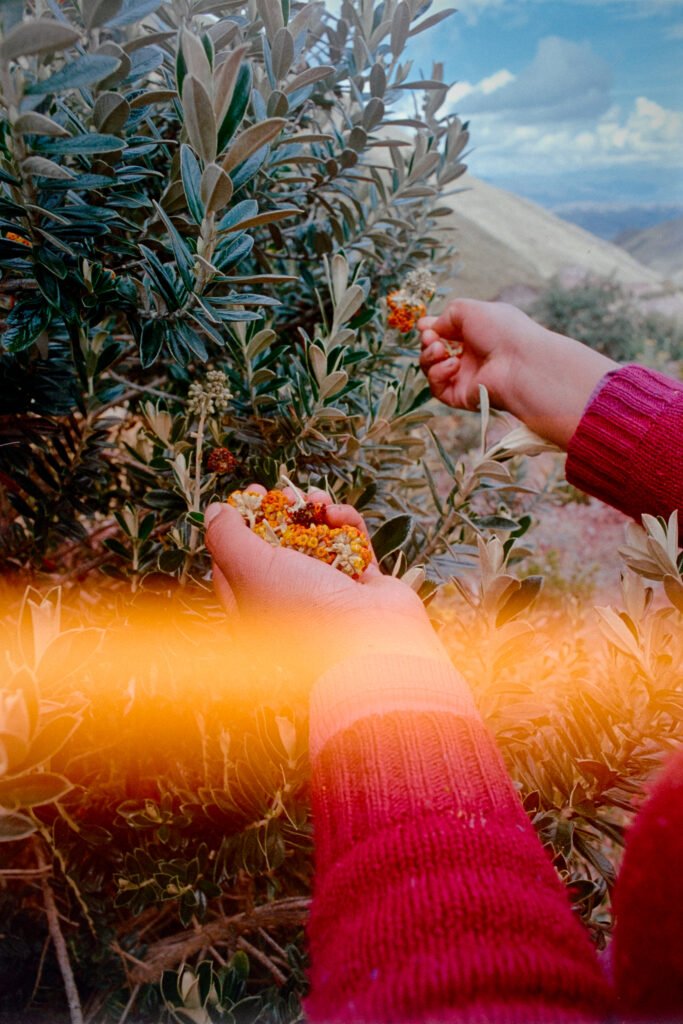
Interested in exploring these ideas of trial and error, the photographer began experimenting with the natural dyes procured by the women from Pumaqwasim. They specialise in harvesting the fruits of qolle and ch’illka, two native plants endemic to the high Andes, and cochineal insects. The three are then transformed into ochres, greens and red tints respectively, used to dye natural fibres with which the women manufacture traditional clothes.
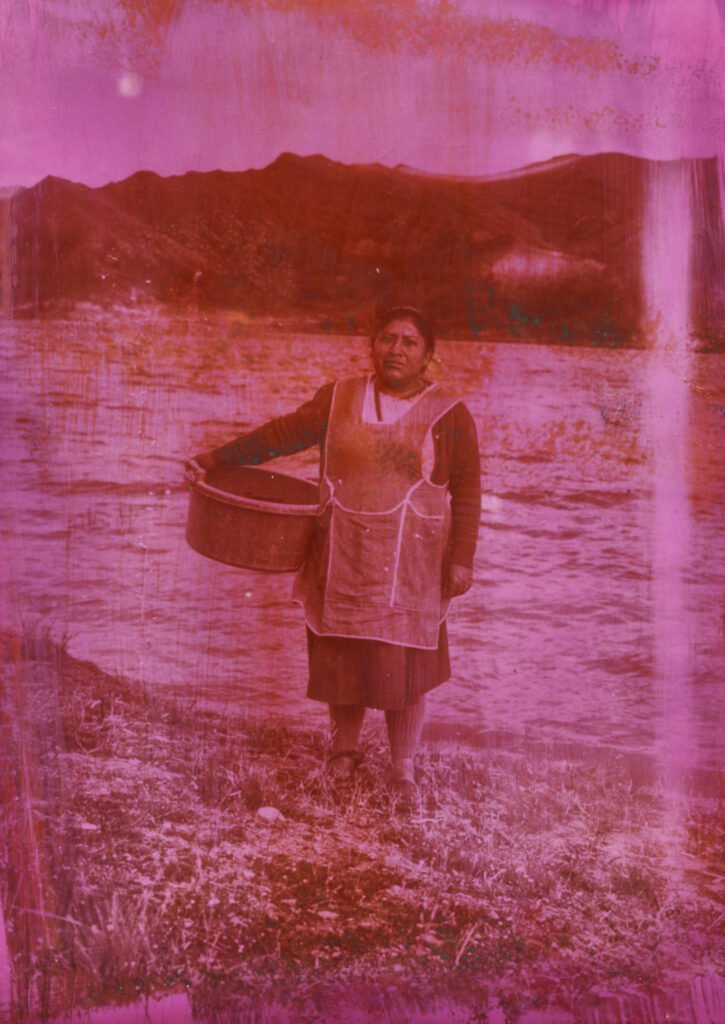
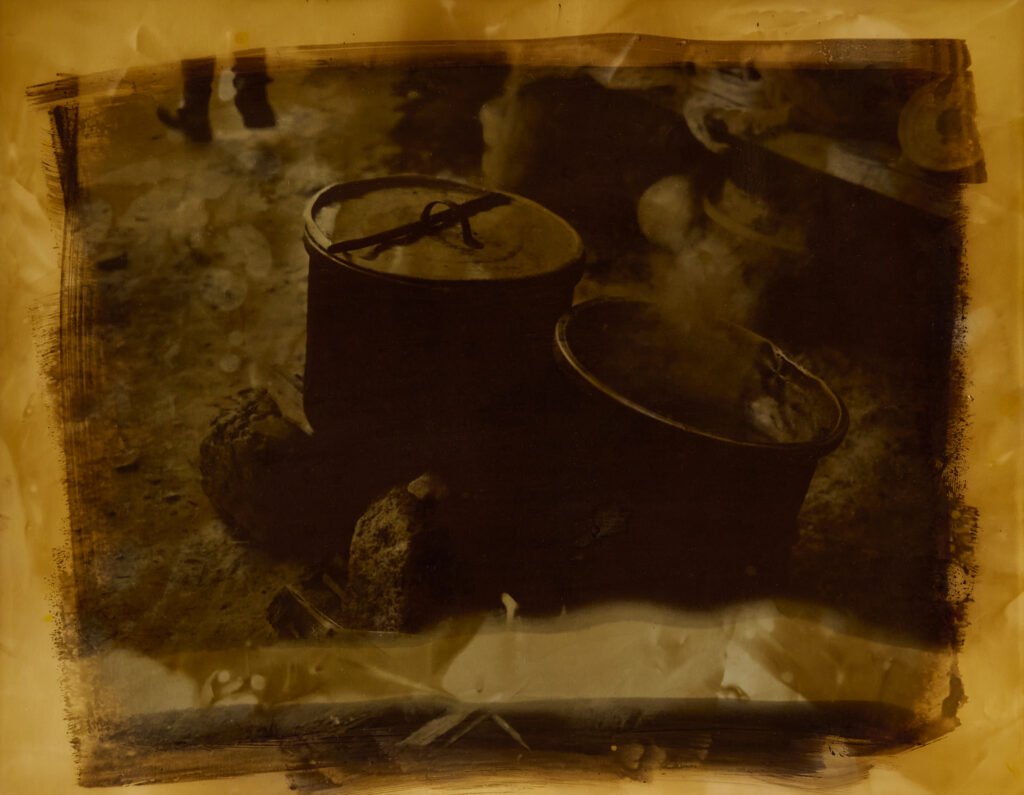
He used the colours extracted from the plants and insects to prepare the surface of the materials, where he later applied the Van Dyke brown process. He trialled fabrics and paper, including photographic paper, allowing the materials to lead the process, in line with the Andean attitude to life of laissez-faire. ‘With this project, I’ve learned a lot from chance and letting yourself go. Also, how to listen to what the project requires of you,’ explains the photographer. The volatility of the natural inks on the support materials employed for the Van Dyke process makes each image unique and further connects the photographs to the conceptual unpredictability of the dyeing process itself.
The work the artisans do is not only about natural dyeing; it is also about resilience, ancestral knowledge, the importance of preserving it for future generations, and environmental stewardship. Equally, Alquimia Textil is not only the documentation of an ancient process. The photographs become vessels to celebrate tradition and the value of slowness by converting the technicity of the photographic medium into a haptic craft. They also visualise the quiet resistance of a group of Indigenous women against the industrialisation of textile processes and its ultimate consequences: the so-called fast fashion and its role in the climate crisis –each year, the blossoming, and therefore the harvest, of the flowers and plants happens later due to the continuously changing environmental conditions.
In 2025, Alquimia Textil was awarded the Sony World Photography Award in the Environment category. This accolade has helped Garrido to position his work in the global photography scene. For him, it has been both a personal and professional affirmation. While it has given him the confidence to trust that leaving a secure job to pursue photography was the right decision, it has also given him permission to keep exploring and trusting the process: ‘I want to continue researching the materiality of photography while making it all more environmentally sustainable.’
(Originally published in 1000 Words on 22 January 2026)
Around the world, politicians are stepping up efforts to criminalise migrants. In the UK, Reform UK is calling to scrap Indefinite Leave to Remain; France is implementing sharp cuts in legal immigration and massive deportations of undocumented people; and in the US, Trump’s administration issued the Executive Order 14159 ‘Protecting the American People Against Invasion’, which, amongst other things, expands expedited removal. Against this backdrop, Stacy Mehrfar’s The Moon Belongs to Everyone, included in this year’s Glaz Festival titled Acts of Love and Rebellion (17 November – 4 January, Rennes and Bretagne), feels especially relevant.
The Moon Belongs to Everyone is a visual poem on what it means to relocate, what it means to come back, and the ever-shifting polymorphic meaning of home. I speak with Stacy Mehrfar about migration, belonging, and identity.
From the series “The Moon Belongs to Everyone”
Raquel Villar-Pérez: Can you tell me about The Moon Belongs to Everyone?
Stacy Arezou Mehrfar: I grew up in an immigrant family. My parents emigrated to the United States from Iran in 1967, and I was born and raised in New York. The home where I grew up felt as if my parents had brought all of Iran with them – the furniture, the decor, the smells, and the sounds were all distinctly Persian. Then I would walk outside the house, and not only was I from an immigrant family, but I was also firmly an American, Jewish, and a woman. I lived on that threshold.
As an adult, I became an immigrant when I moved to Australia. I had no intention of ever leaving New York, but I fell in love and married an Aussie. He also grew up in an immigrant family – he was born in South Africa, and his family immigrated to Australia when he was 10. He owned a business, and I worked freelance, so I left home and moved to Sydney to be with him. I found myself living in another world, where the light was different, the language, even though we both spoke English, was entirely different, and words and gestures held different meanings. I felt upside down.
My immigrant experience was significantly different from that of my parents and their generation. They came to the United States for economic opportunity and religious freedoms, and remained closely tied to the Persian Jewish community from the moment they arrived in New York. My mother learned English as a child, but my dad had very little grasp of the language. They could only speak to their family in Iran once a month. During each phone call, they would schedule the next one to ensure they would connect. Letters could take over a month to get back and forth from Iran to New York, and they assumed the Iranian government was reading their letters before releasing them.
In my case, I migrated during a time of globalisation, when I could speak to my family multiple times a day, every day. Yet, despite this, feelings of in-betweenness and unbelonging remained. The Moon Belongs to Everyone is the result of these life experiences. The title reflects something I came to understand: that while we may leave behind homes, languages, and landscapes, some things—like the moon—remain constant. I decided to photograph through those feelings of in-betweenness and also to include the experiences of other people who had also immigrated to Australia.
RVP: How did you choose your subjects?
SM: I wanted to ensure that I photographed people from diverse countries and cultural backgrounds. I created specific parameters: for instance, they had to have lived in Australia for at least three years and be between 25 and 45 years old. I didn’t include any refugees, as that experience is not my own.
Through our conversations, I discovered that despite our different origins, we all shared similar experiences of feeling ungrounded, of being between here and there, of no longer belonging to either place.
It was important that the photographs convey this sense of dislocation, allowing the viewer to experience that same feeling of navigating and existing within unfamiliar landscapes. I photographed throughout Australia and New York state, but deliberately composed the images so none of the landscapes is recognisable—because when one migrates, even familiar places can feel strange.
RVP: How do you present the work?
SM: Throughout the length of the project, I have explored ideas of change associated with ‘home’ and ‘migrant’. We grow up thinking of home as this steadfast place; however, when you migrate, it changes, and often, it isn’t tied to a physical location. As an immigrant, you are constantly changing, continuously adapting. I wanted the work to physically be different each time it was presented. Initially, it was an eight-channel video installation that was shown twice in Australia, and subsequently, it was published as a photobook published by GOST. There are about 70 images in the project, so every exhibition is an opportunity to create a totally different installation, and this is also the premise for Glaz Festival.
RVP: Elusion is, perhaps, a key component in the project. How do you use this as a resource to talk about the experience of migration?
SM: When I moved, I experienced everything very differently; nothing looked the way I had previously understood it, so I wanted to share that experience of looking at something and not immediately grasping what it was. I started with the colour fields; they were flowers that I found in my neighbourhood, which were unlike any flowers that I found in New York City. I was amazed by their vibrancy, so I put my camera lens directly onto the petals. What I wanted to document was the colour, positioning colour as a trigger for memory.
I’m always questioning photography and the idea that we know what a picture represents. Why can’t a photograph just be the visualisation of an emotion, a feeling, or a sensibility? I want to push against our expectations of what a photograph is.
RVP: Where does the symbology of the moon and the sun used throughout the project come from?
SM: Growing up, I listened to songs in Farsi where the moon is celebrated as the most beautiful thing. There is also a term of endearment, ‘maahe mani,’ which means ‘you are my moon.’ This idea of the moon being something precious has always accompanied me.
When I was making the work, I was thinking about elements that we all experience despite borders. We all have a relationship to the moon and the sun. These elements are experienced across the world. I also thought of the circularity of their motion, how it determines their presence in different regions. Living in Australia, when the sun is up, the moon is up in New York and vice versa. So, living on the opposite side of the planet, when my family was looking at the moon, I was looking at the sun. I found this fascinating and comforting.
RVP: You combine three different genres in the project: landscape, portraits, and still life. Can you tell me more about the role of each in the work?
SM: The work combines four elements: landscape, portraits, still life, and colour fields—each serving a specific purpose.
The colour fields are, as mentioned earlier, extreme close-up photographs of flowers, and in the case of yellow, a school bus. These speak to memory and cultural associations one may have with colour.
Landscape is the key element; it allows me to reflect on the question of what happens when you’re no longer grounded in the place you find yourself in. It was important for me not to have any horizon lines or indications of cardinal directions to convey a sense of loss, fluidity, and constant movement.
The portraits feature individuals who shared the same sense of loss that I experienced in Australia—a feeling of being neither here nor there, in-between. Through photographing them, I realised we had our own distinct culture or community: we were those who moved home.
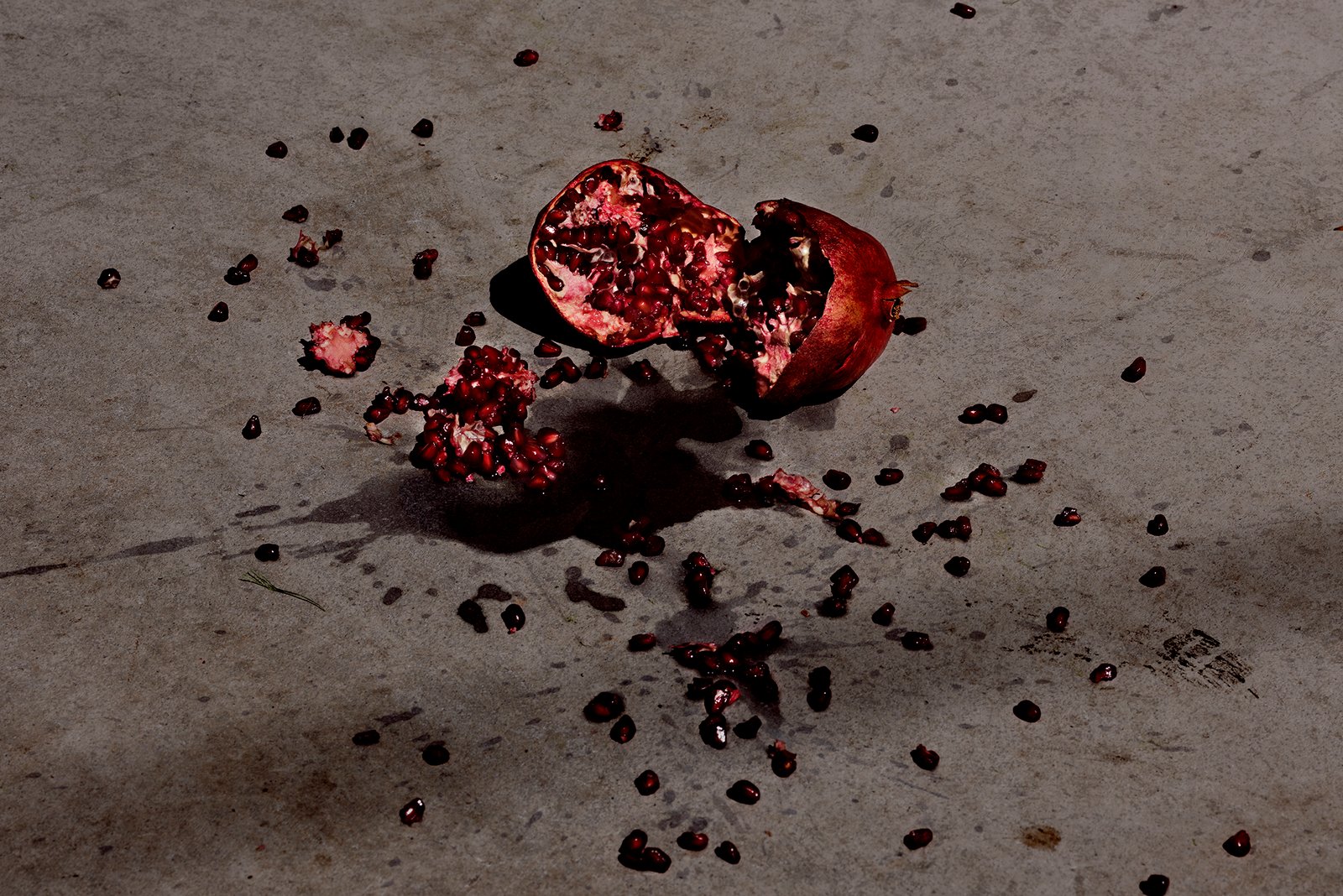
The still lives represent memories – mine and those the others shared with me during our time photographing together — elements that represented home or just comfort. The pomegranate image references a personal memory. As a child, I would fight with my brothers and cousins over who got first dibs on the pomegranate at the Rosh Hashanah seder table. Pomegranates are eaten on the new year to symbolise the wish for a plentiful year ahead. After living in Australia, far away from family traditions, it became a symbol of loss.
RVP: Can you situate The Moon Belongs to Everyone within today’s political climate marked by resurgent conservatism and tighter migratory policies?
SM: The Moon Belongs to Everyone examines how migration reshapes our collective understanding of identity and belonging. It takes an embodied, emotional approach—focusing on the psychological effects of leaving one’s home and the complex process of establishing identity in unfamiliar terrain—rather than a straight documentary approach.
The word ‘immigrant’ has changed so much in my lifetime. Growing up, being immigrants was always a source of pride for my family. By the time I moved back to New York in 2016, the term had become deeply charged. It’s frightening how, especially in the US and Europe, the term has been weaponised to mean ‘other’—something threatening rather than affirming.
I made this work between 2014 and 2021, as global conversations about immigration and nationhood shifted dramatically. Today, with increasingly restrictive policies and rising nationalism, the project feels even more urgent.
RVP: The project can feel a bit hopeless and despairing. As if we migrants are in an endless pursuit of looking for ‘home.’ Do you think that it is ever found?
SM: There is loss in the work. But home, I’ve come to believe, is found in community. Physical home changes—we change, places change—but everywhere you go, you can find home with the people you’re in community with. Home becomes less about a fixed place and more about belonging, adapting, and the connections we build wherever we are.
Part of the 7th edition of the Foto/Industria Biennale in Bologna, Italy
7 November to 14 December 2025
.
No Rest for the Wicked is a visual poem stratified in a multilayered scaffold that echoes the entangled complexities of class, gender, and labour. Grounded on lived, experiential, and embodied knowledge, the project is a personal window into O’Brien’s historical and intergenerational experiences of women’s work in her family.
.
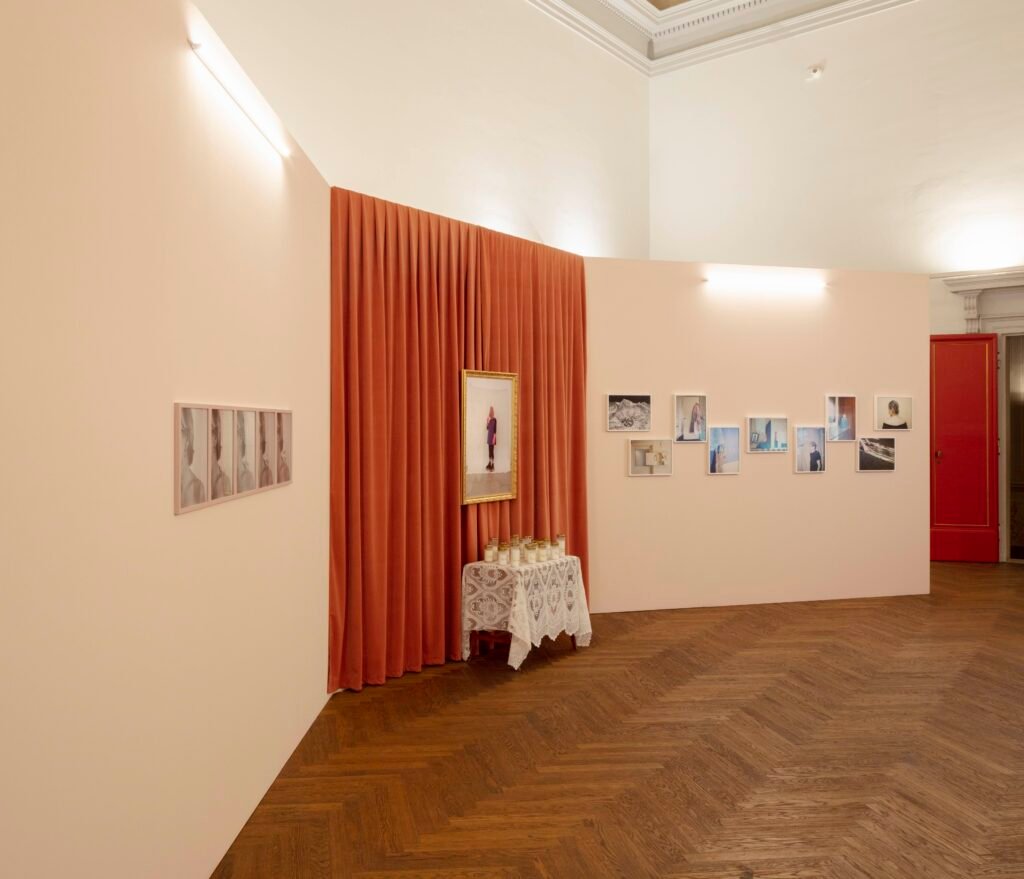
Installation view: No Rest for the Wicked. Foto/Industria Biennale, Bologna, 2025. Courtesy MAST Bologna
.
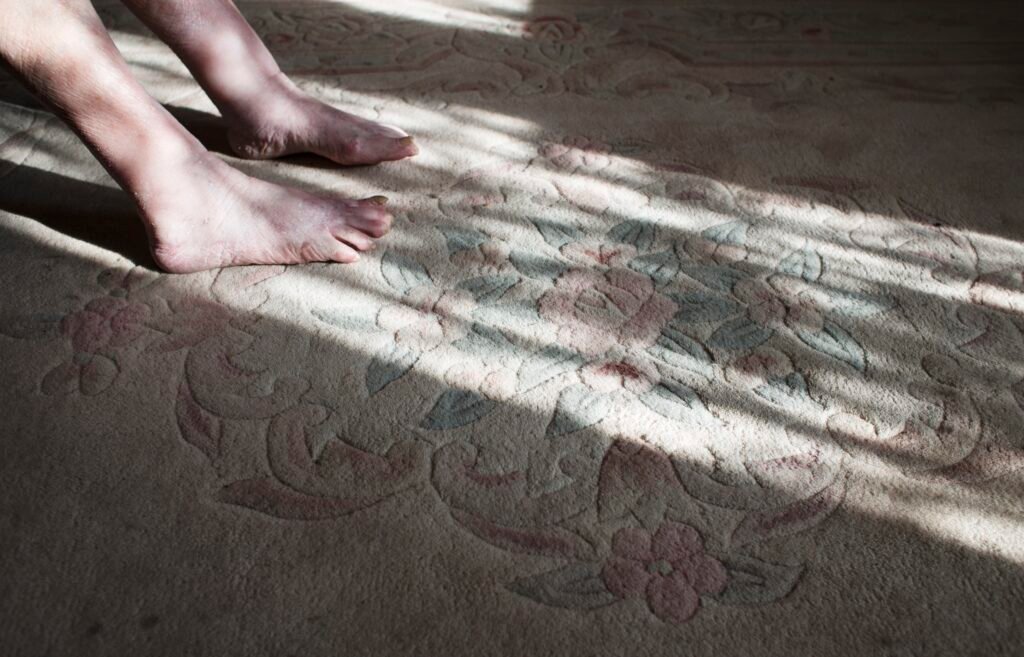
Using a compassionate and tender approach, O’Brien has quietly documented, for over 20 years, the lives of her grandmother and her mother as poor working-class immigrant Irish women living in a council estate in Derby, England.
The narrative wavers between the tensions of domestic work, an area shadowed by persistent gender disparities, and the paradox of home as a sanctuary. While for some it represents their safe space where to rest and reconnect with themselves, for working-class women, home remains all too often an extension of their day’s labour.
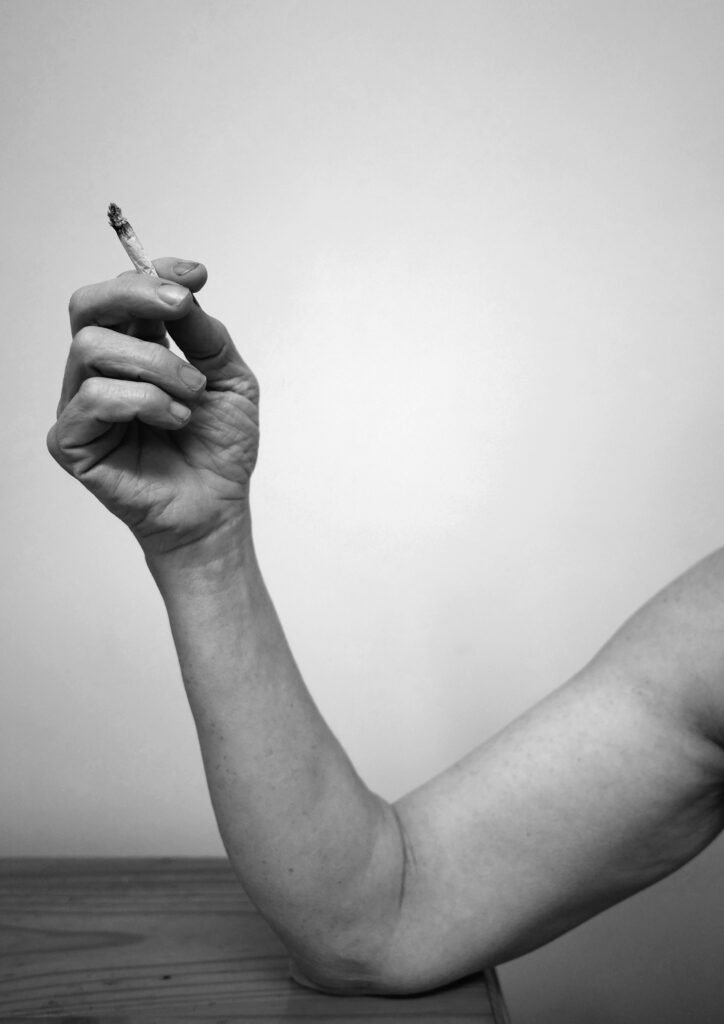
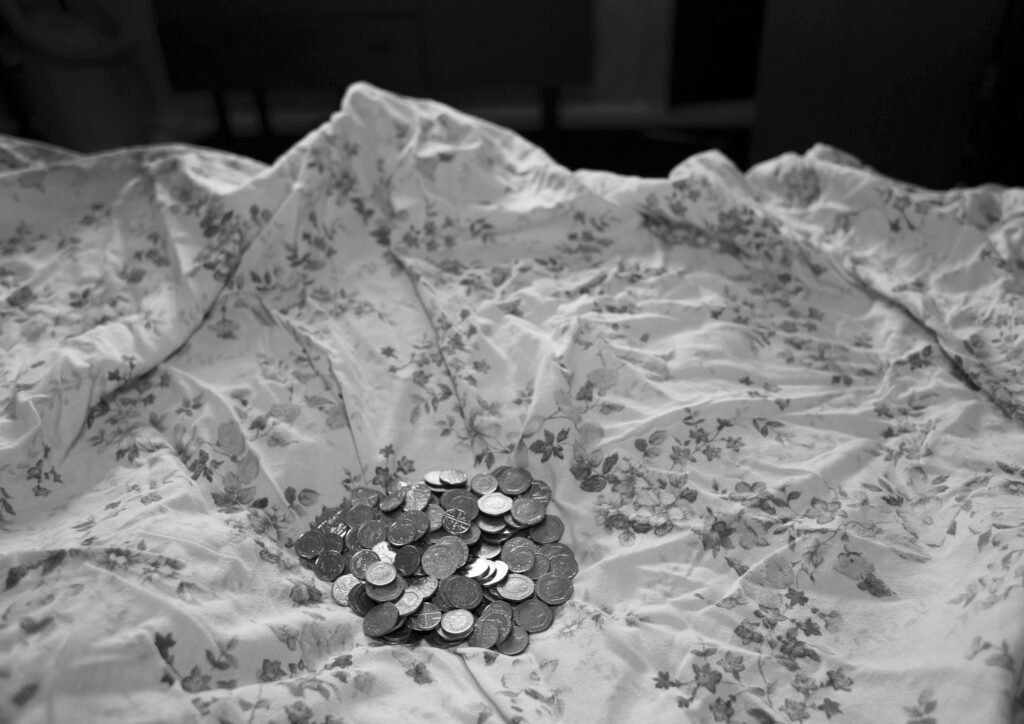
O’Brien takes advantage of the monochrome sobriety to accentuate the historical burdens carried by working-class women; in ‘a chip on your shoulder’ the artist’s mum symbolically confronts this popular British saying, which may refer to resented working-class women. They also depict the ritualised chores she performs within the domestic sphere. By contrast, soft-hued colour images offer intimate warm glimpses of the artist’s grandmother and mother at home, as well as of the different objects and details that make a home.
.
Installation view: No Rest for the Wicked. Foto/Industria Biennale, Bologna, 2025. Courtesy MAST Bologna
.
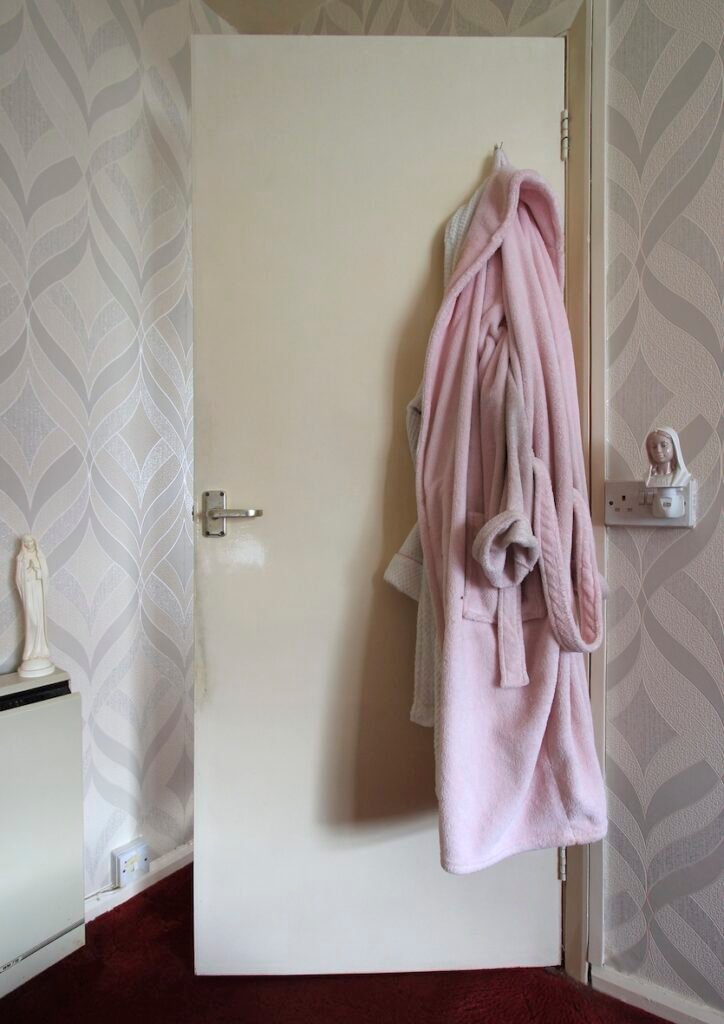
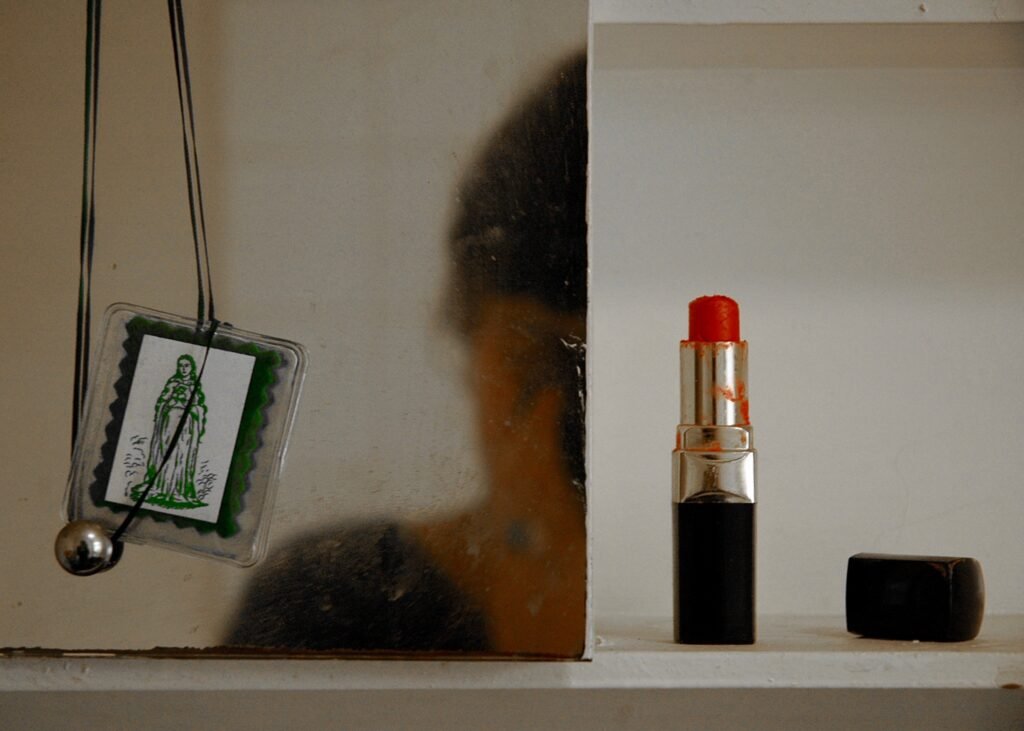
Lives are no other than a compendium of rituals; bigger and small; at home and elsewhere; intimate and shared. They offer connection, contemplation, and escape, and often, they are tied to spiritual practice and religion. O’Brien draws on her grandmother’s devotion to Catholic icons and their presence in the family home, to sanctify working-class women by portraying her mother as a modern-day Saint Zita, patron of maids and domestic servants.
The artist surrounds her with an ofrenda of candles, each containing the name of women who have been systemically drained, who have laboured and cleaned up the world’s messes, literally and metaphorically; those who exposed, who cared, who healed. These names have been collected through a participatory call out. With this intervention, O’Brien embraces and enacts care as a gesture of appreciation for their work.
.
Installation view: No Rest for the Wicked. Foto/Industria Biennale, Bologna, 2025. Courtesy MAST Bologna
.
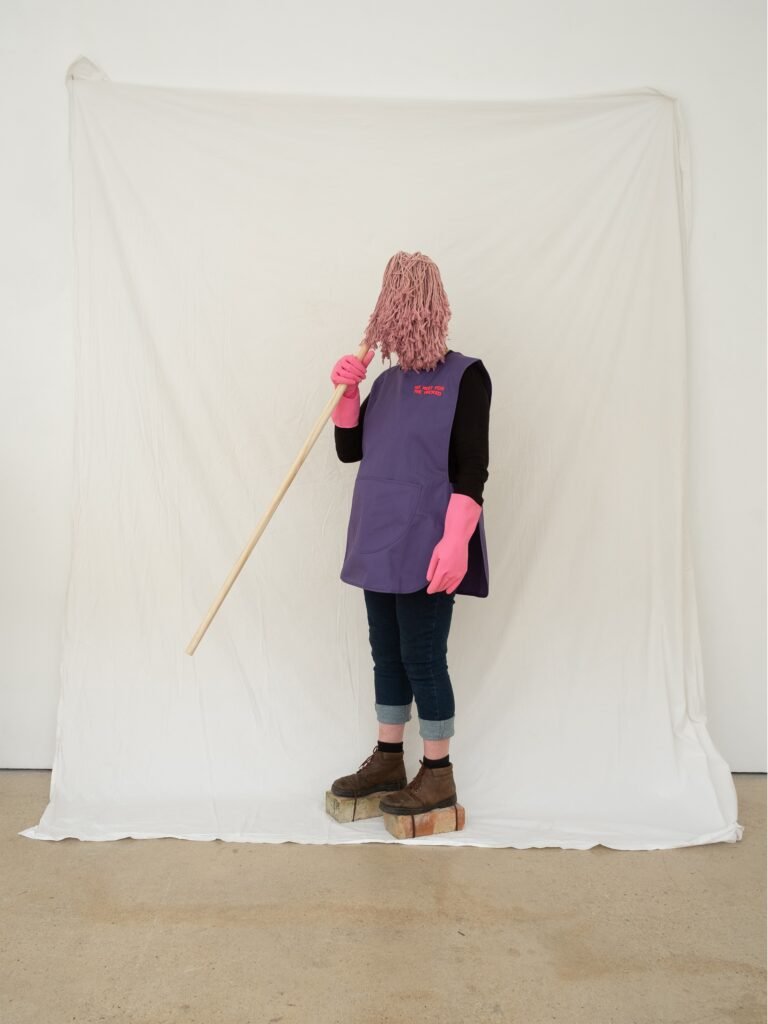
In her most recent artworks, the artist combines bright and bold colour photographs, language, and objects to resignify stock phrases historically used to degrade working-class women. By doing this, O’Brien creates a visual mockery of the entire neoliberal system that sustains inequality and class divisions.
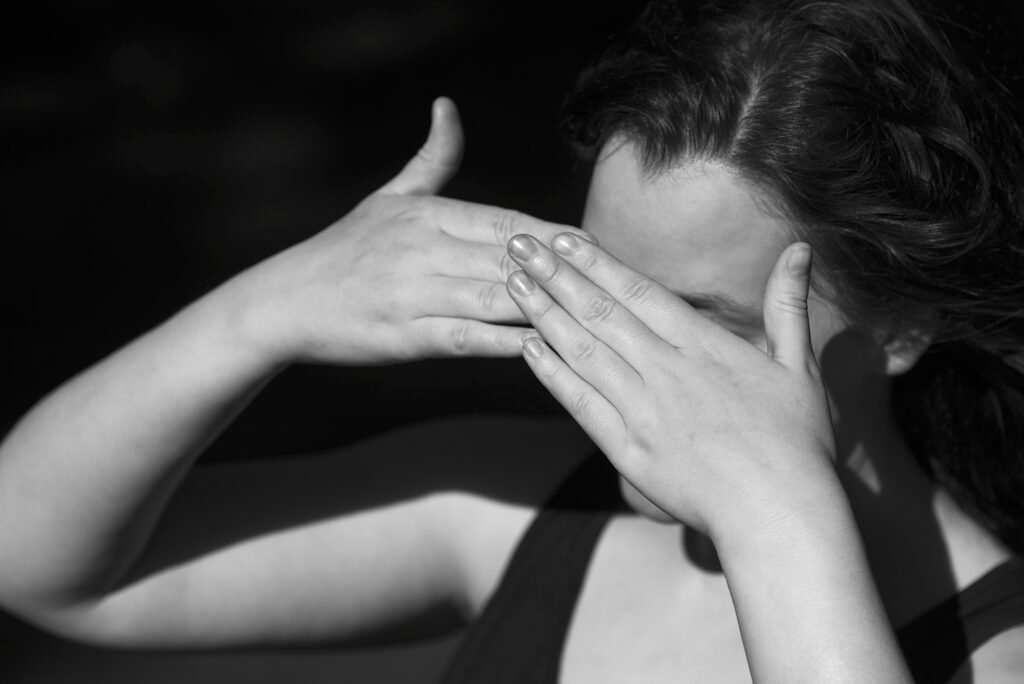
Faces are scarce and when they are present within the frame, they look away, are out of focus, deliberately obscured, or hidden behind a mask. Documenting photographic parables, O’Brien reflects on the politics of shame imposed upon working-class women while commenting on the politics of respectability and strategies they deploy to claim dignity and grace.
No Rest for the Wicked positions and celebrates home as a sacred space while exposing the invisible labour that sustains it. The project underscores the experience of poor working-class women whose labour, despite endlessly repeating the same ritualistic chores both inside and beyond the home, often goes unaccounted for.
.
All images from the series No Rest for the Wicked. Courtesy Kelly O’Brien